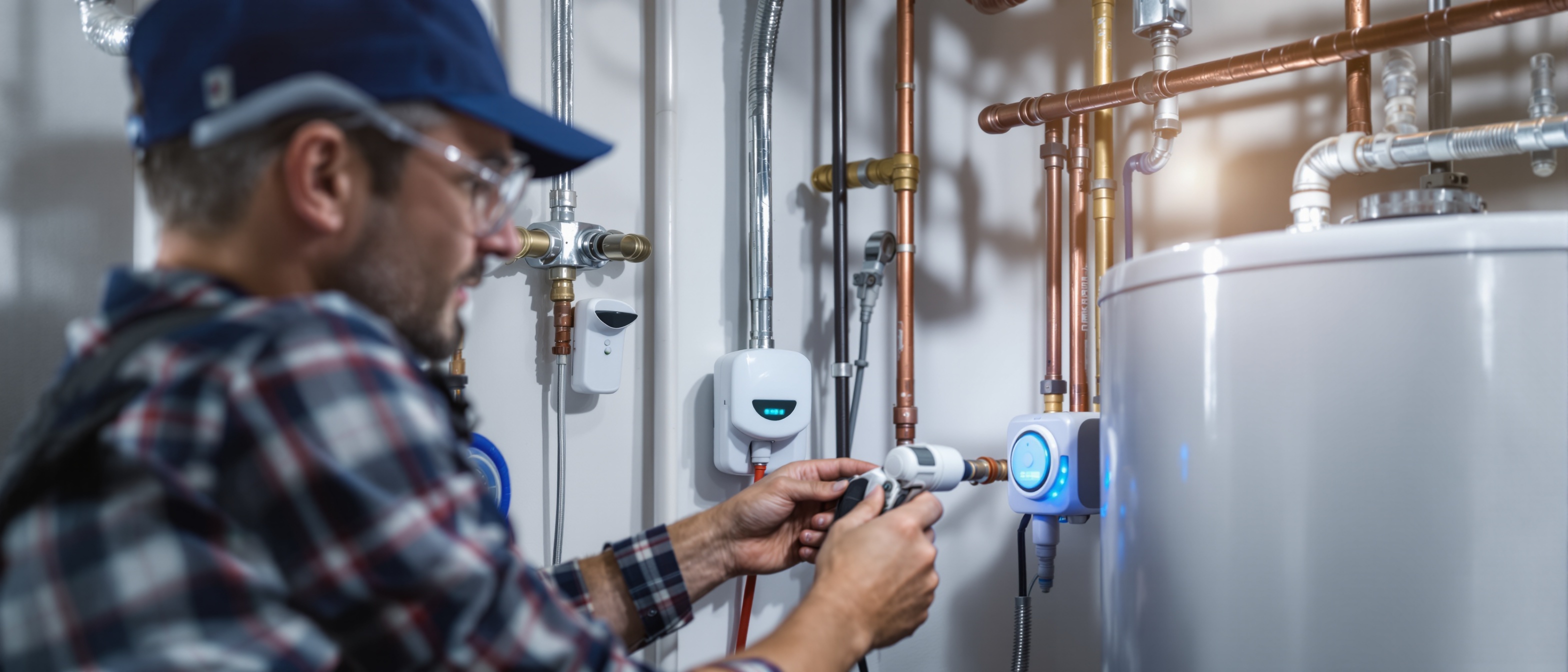
Smart water leak detection is one of the most impactful investments a homeowner can make. According to industry data, smart shut‑off valves can reduce water damage costs by up to 90% by automatically stopping water flow at the first sign of a leak. Yet fewer than 17% of American homes have any form of water sensor installed.
This guide covers everything you need to know — from $15 point‑of‑leak sensors to whole‑home monitoring systems that can pay for themselves through insurance discounts and prevented disasters.
The Cost of Inaction
The average water damage restoration costs approximately $3,867, with severe flooding repairs reaching $16,000 or more. Nationwide, household leaks waste over 1 trillion gallons of water annually — enough to supply 11 million homes for a year.
Types of Leak Detection Systems
Point‑of‑Leak Sensors ($15–$70)
These small, battery‑powered devices sit on the floor near high‑risk appliances and sound an alarm or send a smartphone notification when they detect moisture. They are the simplest and most affordable entry point into leak detection.
Top Picks — Point‑of‑Leak Sensors
SwitchBot Wi‑Fi Leak Detector — ~$15
No hub required. Sends instant smartphone alerts via Wi‑Fi. Compact design fits under sinks and behind appliances. One of the best value options available.
GoveeLife Smart Water Leak Detector — ~$60 (multi‑pack)
Wi‑Fi enabled with 100dB alarm. Works with Alexa and Google Home. Multi‑pack makes it economical to cover your entire home.
Samsung SmartThings Water Leak Sensor — ~$25
Integrates seamlessly with the SmartThings ecosystem. Requires a SmartThings hub. Great for homes already using Samsung smart home products.
Whole‑Home Monitoring Systems ($200–$900+)
These advanced systems attach directly to your main water line and use ultrasonic technology or pressure sensing to monitor flow in real time. They can detect leaks anywhere in your plumbing — even behind walls — and automatically shut off the water supply to prevent catastrophic damage.
Top Picks — Whole‑Home Systems
Flo by Moen Smart Water Monitor + Shutoff — ~$500
Installs on main water line. Uses pressure sensing to detect leaks as small as a dripping faucet. Automatic shut‑off capability. Works with Alexa, Google Home, and Apple Home. Daily health tests run automatically.
Phyn Plus Smart Water Assistant — ~$250
AI‑powered analysis learns your home's water usage patterns. Detects anomalies and can shut off water automatically. Provides detailed consumption insights via app.
Flume 2 Smart Home Water Monitor — ~$200
Straps onto your existing water meter — no plumbing required. Detects leaks and monitors usage. Great option for renters or those who want a non‑invasive installation.
Insurance Discounts & ROI
One of the most overlooked benefits of leak detection systems is the potential for insurance premium discounts. Many major insurers now offer savings for homes with smart water monitoring:
3–10%
Typical premium discount for basic leak sensors
Up to 20%
Discount for professionally monitored systems (e.g., Farmers Insurance)
~10%
Monthly water bill savings from fixing detected leaks
Where to Place Your Sensors
Strategic placement is key to maximizing protection. Focus on these high‑risk locations:
Key Features to Look For
- Automatic Shut-Off:Critical for preventing damage while you are away from home. Whole‑home systems with this feature provide the highest level of protection.
- Smart Home Integration:Compatibility with Amazon Alexa, Google Home, or Apple Home allows unified management and voice‑activated status checks.
- App‑Based Monitoring:Real‑time data on consumption patterns and instant leak notifications directly to your phone, no matter where you are.
- Battery Backup:Ensures the system continues working during power outages — exactly when storms and flooding are most likely.
- Temperature Monitoring:Some sensors also detect freezing temperatures near pipes, giving you early warning before a pipe bursts.
Cost of Damage by Category
Understanding the potential cost of water damage helps put the investment in detection systems into perspective:
| Damage Type | Cost per Sq. Ft. | Typical Total |
|---|---|---|
| Clean Water (Category 1) | $3 – $4 | $150 – $1,500 |
| Grey Water (Category 2) | $4 – $7 | $500 – $3,000 |
| Black Water (Category 3) | $7 – $7.50+ | $3,000 – $16,000+ |
The Bottom Line
A $15 sensor can prevent a $14,000 insurance claim. A $500 whole‑home system can save you from a $16,000+ catastrophe while lowering your insurance premiums and water bills. The math is simple — leak detection is one of the smartest investments a homeowner can make.