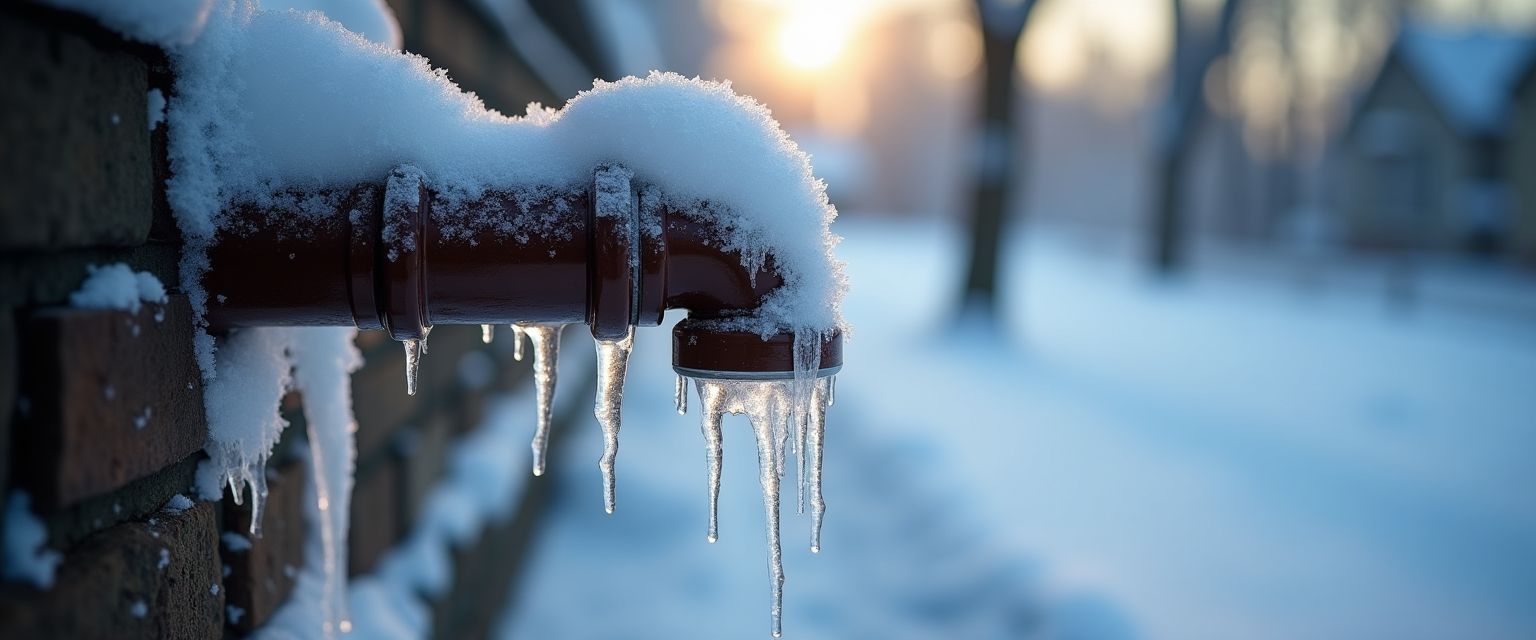
Every year, roughly 250,000 U.S. homes suffer damage from frozen and burst pipes. In 2024, average insurance claims for winter water damage exceeded $30,000, and total losses from a single major insurer topped $628 million across 20,000+ claims. For Utah homeowners, where winter temperatures regularly plunge below freezing, proper winterization is not optional — it is essential.
The good news is that frozen pipe damage is almost entirely preventable. This guide walks you through every step to protect your home before, during, and after Utah's coldest months.
Why Pipes Burst
Contrary to popular belief, pipes don't burst at the point where ice forms. As water freezes, it expands and creates enormous pressure between the ice blockage and the closed faucet. This pressure — which can exceed 2,000 PSI — causes the pipe to fail at its weakest point, often far from the actual ice.
Before Winter: Preparation Checklist
1. Insulate Exposed Pipes
Pipes in unheated areas — attics, garages, crawl spaces, and exterior walls — are the most vulnerable. Use foam pipe insulation sleeves (available at any hardware store for under $1 per foot) to wrap all exposed pipes. For pipes in extremely cold areas, consider adding thermostatically controlled heat tape underneath the insulation for an extra layer of protection.
2. Disconnect Outdoor Hoses
A garden hose left connected during winter can cause ice to back up into the supply pipe inside your home. Disconnect all outdoor hoses, drain them, and store them indoors. If you have outdoor faucet shut-off valves (common in Utah homes), close them and open the outdoor faucet to drain any remaining water.
3. Seal Air Leaks Near Pipes
Cold air drafts can freeze pipes even in heated spaces. Check for gaps around pipes where they enter your home through walls or foundations. Seal them with caulk or spray foam insulation. Pay special attention to areas where cable, phone, or internet lines enter — these holes often let in enough cold air to freeze nearby pipes.
4. Service Your Water Heater
Your water heater works hardest in winter. Flush the tank to remove sediment, check the pressure relief valve, and inspect for corrosion. If your water heater is over 8 years old, consider having it professionally inspected before the cold season.
5. Know Your Shut-Off Valve
If a pipe does burst, every second counts. Make sure every household member knows where the main water shut-off valve is and how to operate it. Test it now — valves that haven't been turned in years can seize up.
During Extreme Cold: Active Protection
Maintain Heat at 55°F+
Never let your thermostat drop below 55°F (13°C), even when you are away or sleeping. The cost of extra heating is a fraction of a burst pipe repair.
Open Cabinet Doors
Open cabinet doors under kitchen and bathroom sinks on exterior walls. This allows warm air from your home to circulate around the pipes.
Drip Faucets Slowly
During extreme cold, let faucets served by exposed pipes drip slowly. Moving water is much harder to freeze, and the drip relieves pressure buildup.
Open Interior Doors
Keep interior doors open to allow heat to flow throughout the house, especially to rooms with plumbing on exterior walls.
The Real Cost of Frozen Pipe Damage
Understanding the financial impact helps put prevention costs into perspective:
| Repair Type | Average Cost | Notes |
|---|---|---|
| Pipe repair (accessible) | $150 – $800 | Kitchen, bathroom, utility room |
| Pipe repair (behind walls) | $150 – $800+ | Plus $50–$75/sq ft for drywall |
| Basement pipe repair | $200 – $5,000 | Spikes if concrete cutting needed |
| Water restoration & drying | $1,300 – $6,000 | Can exceed $15,000 for severe cases |
| Emergency service surcharge | $100 – $300 | After-hours / holiday calls |
| Average total insurance claim | $30,000+ | 2024 national average |
Prevention Cost Comparison
A roll of foam pipe insulation costs about $3–$5. Heat tape runs $15–$30 per section. A smart leak detector is $15–$60. Compare that to an average claim of $30,000+. Winterization supplies for an entire home typically cost under $100 — making it one of the highest-ROI home maintenance tasks you can do.
Leaving Home During Winter?
If you are traveling during cold months, take these extra precautions:
- Keep your thermostat set to at least 55°F — never turn off heat completely.
- Ask a trusted neighbor or friend to check your home daily.
- Consider shutting off the main water supply and draining the system.
- Install a smart thermostat and leak sensors so you can monitor remotely.
- Leave interior doors open to maintain even heat distribution.
- If you have a smart water shut-off valve, enable auto-protection mode.
If Your Pipes Freeze — What to Do
- 1.Keep the faucet open. As ice melts, water needs somewhere to go. Running water also helps melt the ice.
- 2.Apply gentle heat. Use a hair dryer, heating pad, or warm towels. Never use an open flame, propane heater, or blowtorch — this is a fire hazard and can damage pipes.
- 3.Work from the faucet toward the frozen area. This allows water to flow out as you thaw.
- 4.Check all faucets. If one pipe is frozen, others may be too.
- 5.If a pipe has burst, shut off the main water valve immediately and call a professional — (801) 896-1000.
Utah-Specific Considerations
Utah's Wasatch Front — including Davis County communities like Kaysville, Layton, Clearfield, and Farmington — experiences unique winter challenges. Rapid temperature swings (warm days followed by sub-zero nights), heavy snowfall, and spring snowmelt all increase the risk of pipe damage. Homes built before 1990 are especially vulnerable, as they often have less insulation and older plumbing materials.
If you live in an older home, consider having a professional plumber assess your winterization needs. Many local plumbers offer pre-winter inspection packages for $100–$200 — a small price compared to the potential cost of a burst pipe.